Aging in Place in Tucson's Midtown and East Side: What the House Itself Tells Us

Quick answer: Tucson's neighborhoods were built in different decades for different lives, and each one creates its own risks for a parent trying to stay home.
Midtown's 1950s ranches have narrow bathrooms and step-downs. East Side homes from the 80s and 90s have two-story layouts and long distances to anything. The older houses near the university have stairs and settling floors. We walk every house before care starts, and the plan comes from what we see there.
When families call about a parent in Tucson, they describe the person. When we visit, we spend as much time looking at the house. In our experience, the house can tell us almost as much as the person living in it.
Here's what we see, neighborhood by neighborhood.
Midtown and Central: the brick ranch
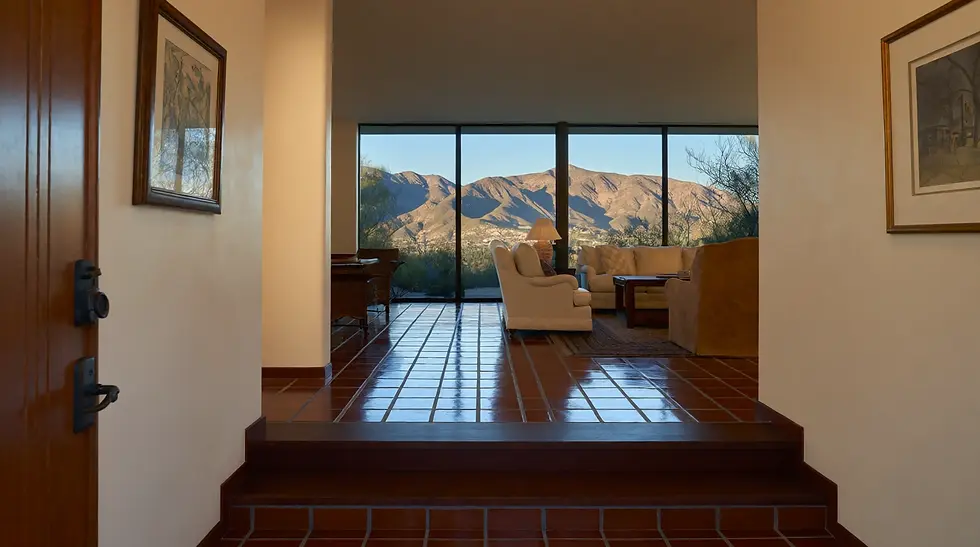
Built in the 50s and 60s for young families. Single story, which is good. But you may find narrow hallways that won't fit a walker, a bathroom with a step-in tub and no room for a shower chair, a sunken living room with one step nobody remembers until they miss it, and a carport with a raised threshold at the kitchen door.
What helps: a handheld shower head and a transfer bench, a night light in the hall, that one step marked with tape, and a caregiver who knows the house's tricks.
Midtown is also where our receivers are most likely to have lived forty years and know every neighbor, so companion care here often means getting to the things they still love — the Loft, the Rillito path, the Tuesday farmers market.
The East Side and Rita Ranch: the two-story
Newer homes, bigger footprints, and often a master bedroom upstairs. That staircase becomes the whole story after a fall or a hip replacement. Some families end up moving Dad to the downstairs den, which works for a while.
What helps: standby assistance on the stairs during the risky months, a plan for where he actually sleeps, and transportation — the East Side is spread out, and once the driving stops, it can become harder to stay connected. Our caregivers here drive.

Near the university and Sam Hughes: the old house
Character everywhere. Also: hardwood floors that slope, thresholds between every room, a bathroom added in 1940, and a kitchen with everything on a high shelf. Beautiful, and unforgiving to someone with a walker.
What helps: rugs gone, thresholds ramped or marked, the everyday dishes moved to counter height, and personal care in the bathroom when a little extra support is needed.
The one thing every Tucson house shares
Heat. From May through September, a parent who is home alone in a house with a struggling swamp cooler or a thermostat set to 84 to save money is a real risk. Our caregivers check the temperature every visit, keep water in reach, and move outings to early morning. In July, "she went to get the mail" is not a small sentence.
Why the walkthrough matters
Everything above is why the free in-home consultation happens at the house and not on the phone. We see the step-down, the tub, the stairs, the thermostat, and we build the plan around them. Sometimes the plan is a shower chair and two mornings a week. Sometimes it's "you're fine for now."
The person who then shows up is a senior too — someone who knows a Tucson summer and understands what your mother is dealing with. That's Seniors Helping Seniors® in Tucson. Bonded, insured, background-checked, Arizona fingerprint-cleared, and the same caregiver or small team whenever possible.
Frequently asked questions
Do you help with home safety changes in Tucson, or just recommend them? We recommend and we help you prioritize. Installation of grab bars and the like is a handyman's job; we'll tell you what matters most and, if you'd like, be there when it's done.
My mother is in a two-story East Side house and won't move downstairs. What do you do?
Standby assistance on the stairs during the times she uses them, and a caregiver present during the times she typically needs the most support — morning and bedtime. Many families find she moves downstairs on her own once the caregiver is a regular presence.
Does the neighborhood change what care costs?
No. Pricing is by the hour and depends on the type of care and the schedule, not the address. We'll walk through it at the consultation.
If you're wondering whether your parent's house can keep working for them, that's what the visit is for. Call us at (520) 487-4246 or request a free in-home consultation. We serve Tucson, Catalina Foothills, Vail, Green Valley, and the surrounding Southern Arizona communities.


Comments